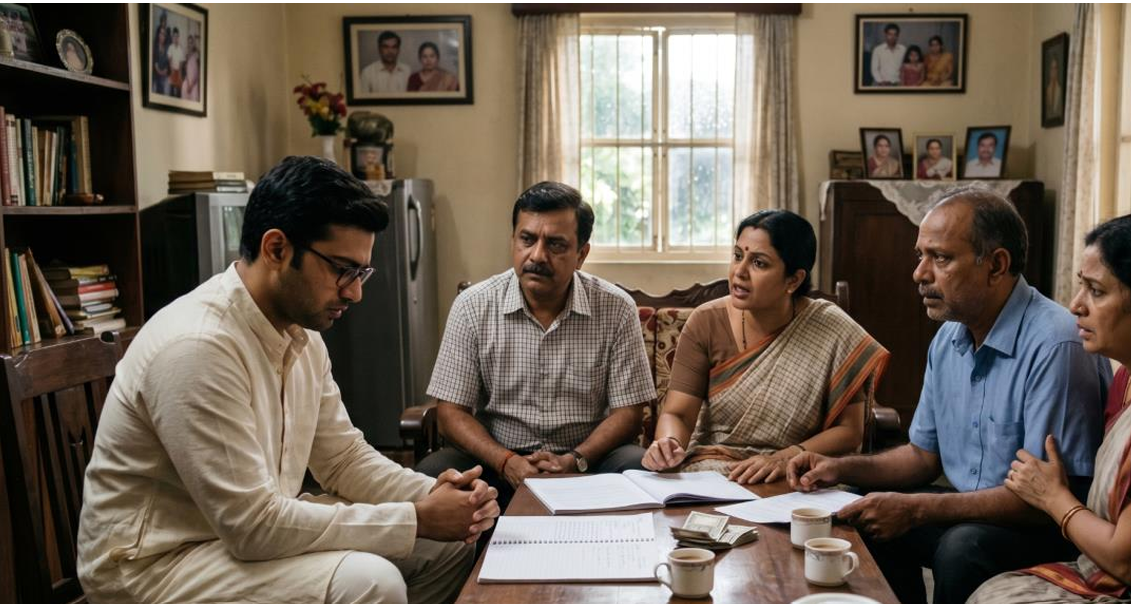
How Education Became a Pricing Tool in the Marriage Market
In many parts of India, a groom's qualification is treated like a market asset. Families calculate years of investment — school fees, college fees, coaching classes, hostel costs — and expect a return. That return often comes in the form of dowry.
An engineer from a reputed college or a doctor with a post-graduate degree represents years of family sacrifice. His parents feel entitled to "recover" that investment through marriage. This is how education, which should be a personal achievement, becomes a negotiation chip.
The girl's family is expected to compensate for the groom's qualifications. The more he has studied, the higher the "rate."
The IIT-IIM-Doctor Bracket: Where Dowry Peaks
Families with sons who are IIT graduates, IIM MBAs, UPSC officers, or specialist doctors often have the highest dowry expectations. In many cases, demands run into lakhs — sometimes crores — in cash, gold, property, or a combination of all three.
This happens across communities and regions. It is not limited to one caste or one state. The common thread is simple: the groom's earning potential is seen as a commodity, and the bride's family must "buy" access to it.
The sad irony is that these are often the same men and families who claim to be modern and progressive in other ways.
Why Families on the Bride's Side Agree
This is where the cycle becomes self-sustaining. Many families on the girl's side accept these demands because they fear losing a "good match." A highly qualified groom is seen as a guarantee of security, social status, and respect. So they stretch their savings, take loans, or sell assets.
They tell themselves it is a one-time expense. But the emotional and financial cost often lasts years.
The pressure is real. But it is also worth asking: does a groom who demands dowry — regardless of his qualifications — truly offer the stability a family hopes for?
The Qualification-Dowry Link: A Comparison by Profile
| Groom Profile | Common Dowry Expectation | Justification Often Given |
|---|---|---|
| Government employee (Grade A) | ?10–30 lakh + gold | "Secure job, lifetime income" |
| Engineer (private sector, metro) | ?5–20 lakh | "Good salary, urban lifestyle" |
| MBBS / MD Doctor | ?20–50 lakh or more | "Years of education, high earning" |
| IIT / IIM graduate | ?25 lakh – ?1 crore+ | "Premium qualification, top career" |
| NRI (settled abroad) | Cash + property + foreign trip | "Foreign income, visa access" |
These are not fixed figures. They vary by region, community, and family. But the pattern is consistent: higher qualification, higher demand.
What This Does to the Idea of Compatibility
When dowry becomes the centre of a marriage negotiation, compatibility takes a back seat. Families spend more time discussing what the girl's side will "give" than understanding whether the two people actually suit each other.
This is a serious problem. A marriage built on financial transactions rarely builds genuine partnership. The girl enters her new home carrying the weight of what her family paid. That is not a healthy foundation.
Real compatibility is about shared values, communication, life goals, and mutual respect. Qualifications on paper say very little about the kind of husband or partner someone will be.
How Educated Men Justify the Demand
Most qualified men do not openly say "I want dowry." The conversation is more indirect. Families talk about "gifts," "helping the new couple settle," or "contributing to the wedding." But the expectations are clear, and refusal often kills the match.
Some men genuinely believe they are offering a good life and that dowry is a fair exchange. Others simply go along with what their parents decide. Either way, the result is the same for the bride's family.
Education does not automatically produce awareness. A man can have an engineering degree and still carry deeply patriarchal assumptions about marriage.
The Legal Reality Families Forget
Dowry is illegal in India. The Dowry Prohibition Act of 1961 makes giving and taking dowry a criminal offence. It carries imprisonment of up to five years and a fine.
Yet enforcement is weak, and social acceptance remains strong. Many families treat dowry as tradition rather than law-breaking. But knowing your legal rights matters — especially if demands escalate after engagement or marriage.
If you or someone you know is facing pressure, legal aid is available. No degree — however impressive — gives anyone the right to demand dowry.
What Families Can Do Differently
The most important shift is in how you evaluate a match. Qualifications tell you about a person's academic history. They do not tell you about his character, emotional maturity, or how he treats people around him.
Here are some things to look for instead:
- Does he speak respectfully about women in his family and social circle?
- Does his family engage with your family as equals, or with a sense of entitlement?
- Are the conversations during match-viewing focused on both individuals, or only on what the girl's side will provide?
- Does he have a clear, honest conversation about finances and expectations before engagement?
These signals matter more than his college name.
How Platforms Like Marriage Jodi Approach This
Good matrimony platforms do not exist to facilitate dowry. They exist to help two people find a compatible life partner. Marriage Jodi is built around that idea — connecting families and individuals who are looking for genuine compatibility, not transactions.
When you search for a match on Marriage Jodi, you can focus on values, family background, life goals, and communication style. The platform is designed to put the right information in front of you so you can make a thoughtful, informed decision — not a pressured one.
If you are tired of the qualification-dowry equation, you are not alone. Many families are choosing to look beyond degrees and demand something more important: mutual respect.
A Note for Grooms and Their Families
If you are a qualified man reading this, you have the power to change this pattern. Your education is yours. It does not entitle your family to financial compensation from the bride's side.
The best thing you can do is have an honest, direct conversation with your family before matrimony begins. Make it clear that dowry is not part of your expectations. That one decision can change the entire tone of the process for both families.
A match built on fairness lasts. A match built on what was paid rarely does.