Haldi Ceremony: Meaning, Rituals, Dress and Decor Ideas
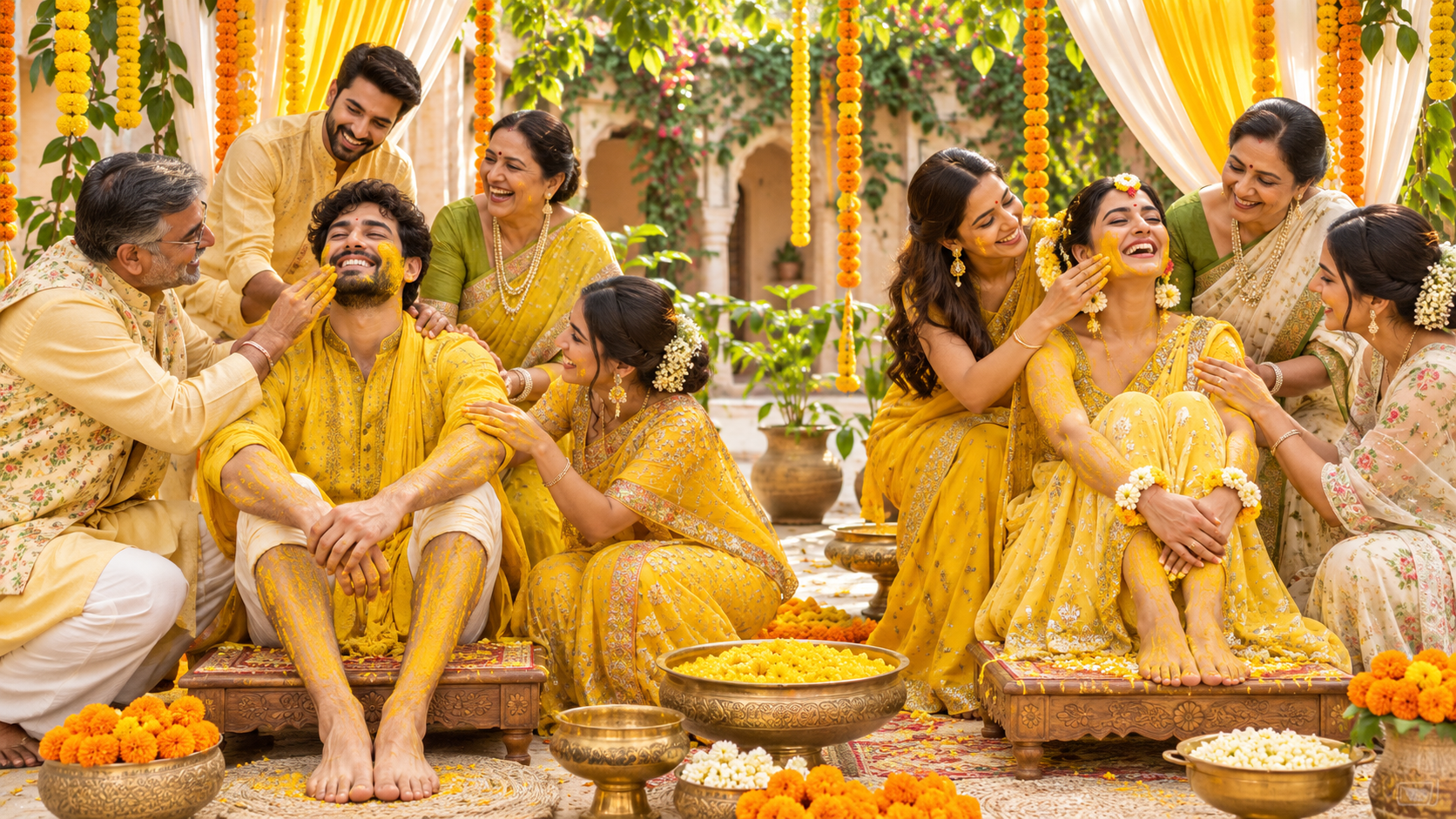
The haldi ceremony is one of the happiest moments of an Indian wedding. Family members apply turmeric paste on the bride and groom. There are songs, laughter and a lot of yellow.
But the haldi ceremony is more than fun photos. It carries blessings, old beauty traditions and a strong sense of family. This guide explains its meaning, rituals and dress ideas. It also shares budget decor tips and captions for your posts.
What Is a Haldi Ceremony?
A haldi ceremony is a pre-wedding ritual where family members apply turmeric paste to the bride and groom. It usually takes place a day or two before the wedding. Some families hold it on the wedding morning.
The bride and groom normally have separate haldi ceremonies at their own homes. Elders, siblings, cousins and friends take turns to apply it. They cover the face, arms, hands and feet.
In Hindi, haldi means turmeric. Different regions call it Pithi, Ubtan, Mayun or Gaye Holud.
Why Is the Haldi Ceremony Done? Meaning and Significance
Turmeric holds a sacred place in Hindu tradition. Families use it in pujas, and its yellow colour stands for purity, prosperity and new beginnings. So applying haldi is a way of blessing the couple before they begin married life.
Families also believe haldi protects the bride and groom from the evil eye. So in many homes, the couple does not step out of the house after haldi until the wedding.
There is a beauty side too. Turmeric has long been part of Indian skincare. Mixed with gram flour and curd, it works as a gentle scrub. It leaves a soft glow for the wedding photos.
Finally, the ceremony brings the family close. In the rush of wedding planning, haldi is a relaxed hour where everyone laughs, sings and plays together.
Haldi Ceremony Rituals Step by Step
Customs differ across communities, but most haldi ceremonies follow a similar flow.
- The family prepares the haldi paste, often while singing traditional songs.
- The bride or groom sits on a low stool, or patla, usually dressed in yellow.
- The family does a small puja and first offers the paste to the family deity.
- Married women, usually the mother, aunts and sisters-in-law, apply haldi first.
- Siblings, cousins and friends follow, often turning it into a playful haldi fight.
- Some homes send a bit of the same paste to the other side for their ritual.
- The bride or groom bathes after the ceremony and stays indoors until the wedding.
How to Make Haldi Paste (Ubtan) at Home
Most families make the paste with simple ingredients from the kitchen. Here is a common mix.
| Ingredient | Purpose |
|---|---|
| Turmeric powder | Main ingredient for colour and blessing |
| Gram flour (besan) | Acts as a gentle scrub |
| Curd or milk | Softens the skin |
| Rose water | Adds fragrance |
| Sandalwood powder | Cools the skin |
| A few drops of mustard or coconut oil | Helps the paste spread |
Mix the ingredients into a smooth, thick paste. Always do a small patch test a few days before. This matters most for sensitive skin.
Haldi Ceremony Across India
Every region adds its own flavour to the ritual.
In Punjab, the Maiyan ceremony uses vatna, a paste of turmeric, flour and mustard oil. Girls sing folk songs. In many families, women hold a red cloth or phulkari above the bride.
In Bengal, families hold Gaye Holud on the wedding morning. The groom's haldi comes first. His family then sends the leftover paste to the bride's home with gifts. In Gujarat, people call the ritual Pithi. In Maharashtra, families perform Halad Chadavne.
In South India, the ritual is often part of the Nalangu or Mangala Snanam ceremonies. Telugu families perform Pellikoothuru and Pellikoduku for the bride and groom.
Haldi Ceremony Dress Ideas for Bride, Groom and Guests
Yellow is the classic haldi ceremony colour. It blends with the haldi and looks bright in photos. Light shades of mint, peach and white also work well.
For the bride, a light cotton saree, a yellow lehenga, a sharara set or an anarkali is comfortable. Choose fabrics you do not mind staining. Fresh flower jewellery looks lovely and costs little.
For the groom, a yellow or white cotton kurta with pyjama is the easiest option. Many grooms pick a kurta with a light printed jacket.
Guests can wear yellow, but many avoid outshining the couple. Simple cotton outfits and comfortable footwear work best, because things get messy.
Haldi Ceremony Decoration Ideas on a Low Budget
You do not need a big decorator for a beautiful haldi. A few simple ideas go a long way.
Marigold strings make the best haldi ceremony background. Hang them in a curtain behind the patla. Add a few yellow and white drapes for depth.
Use brass urlis filled with water and flower petals around the seating area. Low wooden stools, floor cushions and handmade name boards add a personal touch.
Fresh flowers in yellow, white and orange create a warm look. Small handwritten signs with funny lines make good photo props. A courtyard, terrace or garden in natural daylight gives better photos than a dark hall.
Haldi Ceremony Captions and Quotes
- Haldi done, glow on.
- A little yellow, a lot of love.
- Turmeric, tears of joy and family cheers.
- Golden hour, haldi edition.
- Blessed with haldi, ready for forever.
- Yellow is the colour of our happiness today.
- ????? ?? ????, ??????? ?? ????
- Painted in yellow, smiling in gold.
Haldi Ceremony Tips for the Bride and Groom
Remove your nail paint and wear old innerwear, because turmeric stains. Keep a mild soap and a soft towel ready for the bath.
Wash off the paste within an hour. If you want a lighter tint, rinse with lukewarm water and gram flour. Avoid harsh scrubbing right before the wedding.
Plan haldi on a day away from your mehndi, so the stain does not affect the henna colour. Many families place haldi before the mehndi or on separate days.
Where Your Wedding Story Begins
Every haldi ceremony has one thing in common. Two families who started as strangers now share songs, sweets and blessings. That bond starts long before the wedding, often with the first conversation between two people.
If you are looking for a partner who respects your traditions, Marriage Jodi can help. You can filter profiles by community, region and family values, and connect when you feel ready. For more wedding planning help, read our guide on how to choose a wedding venue in India.
Frequently Asked Questions
What is the meaning of the haldi ceremony?
The haldi ceremony is a pre-wedding ritual where family members apply turmeric paste to the bride and groom. It is a blessing for purity, prosperity and protection before married life begins.
When is the haldi ceremony held?
It is usually held one or two days before the wedding, or on the wedding morning. Families choose the time based on their customs and the muhurat.
What should the bride wear for the haldi ceremony?
Most brides wear yellow, in a light cotton saree, lehenga or sharara. Pick comfortable fabric that you do not mind staining, and pair it with flower jewellery.
Is the haldi ceremony done separately for the bride and groom?
Yes, in most families the bride and groom have separate haldi ceremonies at their own homes. Some modern couples now hold a joint haldi.
How do I remove the haldi stain before the wedding?
Wash it off within an hour with lukewarm water and a gentle soap. A paste of gram flour and milk also helps fade the tint without harming your skin.
Ready for your own haldi day? Register free on Marriage Jodi and find a match who shares your traditions.